Emotional Intelligence in Relationships
For singles, engaged couples, and married couples.
Two sessions, 2.5 hours each — a total of 5 training hours, offered as one package.
Love and attraction matter, and relationships also need skills: understanding your emotions, expressing your needs, maintaining boundaries, and handling differences without hurtful behaviour.
Whether you are single and want to choose a partner thoughtfully, engaged and preparing for marriage, or married and looking to develop your relationship, the course helps you understand yourself and how you relate to others, while learning communication and conflict-management skills.
The content draws on John Gottman’s work on marital relationships, emotional intelligence tools, and attachment research. Some topics directly address married life, while also offering singles and engaged couples a way to understand relationship skills and expectations before marriage.
The course in one sentence
Conflict itself is only part of what strains a relationship; how you handle it matters. Understanding yourself, your boundaries, and how you communicate is an important step before and during a relationship.
Session one: Understand myself and manage my emotions
- What emotional intelligence means in relationships, and why love alone is not enough.
- Four harmful communication patterns — criticism, contempt, defensiveness, and withdrawal — and an alternative to each.
- Emotional flooding: why we say things we regret when upset, and how to notice escalation and calm ourselves.
- Your emotional legacy: how your childhood home influences your expectations, boundaries, and responses to closeness and conflict.
- How to raise something that bothers you and express a need clearly, without accusation or hurtful language.
Session two: Understand the other person and approach relationships with awareness
- Love maps: knowing your partner deeply and understanding the value of getting to know someone before marriage.
- Small everyday interactions that strengthen connection and care, or create distance.
- Empathy and respect for different perspectives while maintaining your own views and boundaries.
- Recurring disagreements that may persist, and how to handle them; distinguishing differences you can live with from harmful behaviour that requires boundaries.
- Reviewing your part in a disagreement, repairing what is yours to repair, and understanding both partners’ roles in building trust.
- The “6 hours a week” plan for nurturing a relationship between partners, and how everyday practices fit within shared responsibility.
Who is the course for?
Singles
Understand your emotions, needs, and boundaries, and prepare for a relationship with awareness. Observe a potential partner’s communication, handling of differences, and respect for boundaries alongside attraction.
Engaged couples and those preparing for marriage
Explore expectations, responsibilities, privacy, and boundaries around others’ involvement, while practising communication and handling differences before marriage.
Married couples at any stage
Work on regulating emotions, expressing needs, and understanding conflict patterns and attempts at repair, whether your relationship is stable and you want to nurture it, or you are experiencing tension and want to understand what is happening.
Individual attendance is available and useful. For engaged and married couples, attending together offers an opportunity to discuss ideas and practise skills together.
Alongside the course
- The Emotional Intelligence in Relationships test before the session, using the track that fits your current situation. The test is currently available in Arabic.
- Practical exercises during the session.
- The option to retake the test after a month to reflect on your answers and notice changes; a change in score alone does not establish the course’s effect.
Important to know
Similar levels of emotional awareness and skills matter when choosing a partner, but a test score alone cannot determine compatibility or readiness for marriage. If both of you participate, you can use the results to start a conversation, without treating them as a compatibility map or a guarantee of relationship quality.
Each person is responsible for their behaviour and developing their skills. Understanding someone does not make you responsible for raising or changing them. Repairing conflict does not mean giving up your boundaries or staying in a harmful relationship.
Frequently asked questions
Do I need to be in a relationship to attend?
No. You can begin understanding your emotions, needs, and boundaries while single. Some course topics specifically address marital relationships.
Do both partners have to attend?
No. Individual booking is available for one person. Attending together may help partners discuss what they learn, but it is optional and does not make either person responsible for changing the other.
How could this help me while engaged?
By exploring expectations, communication, boundaries, and handling differences before marriage. Attending the course or taking the test does not establish readiness for marriage.
Our relationship is going well. Could the course still help?
It may help you review communication habits, understand needs, and respond to pressures before disagreements accumulate.
Can the test score tell us whether we are compatible?
No. The test supports reflection on your responses. It does not provide a compatibility score or a judgement about a partner or relationship.
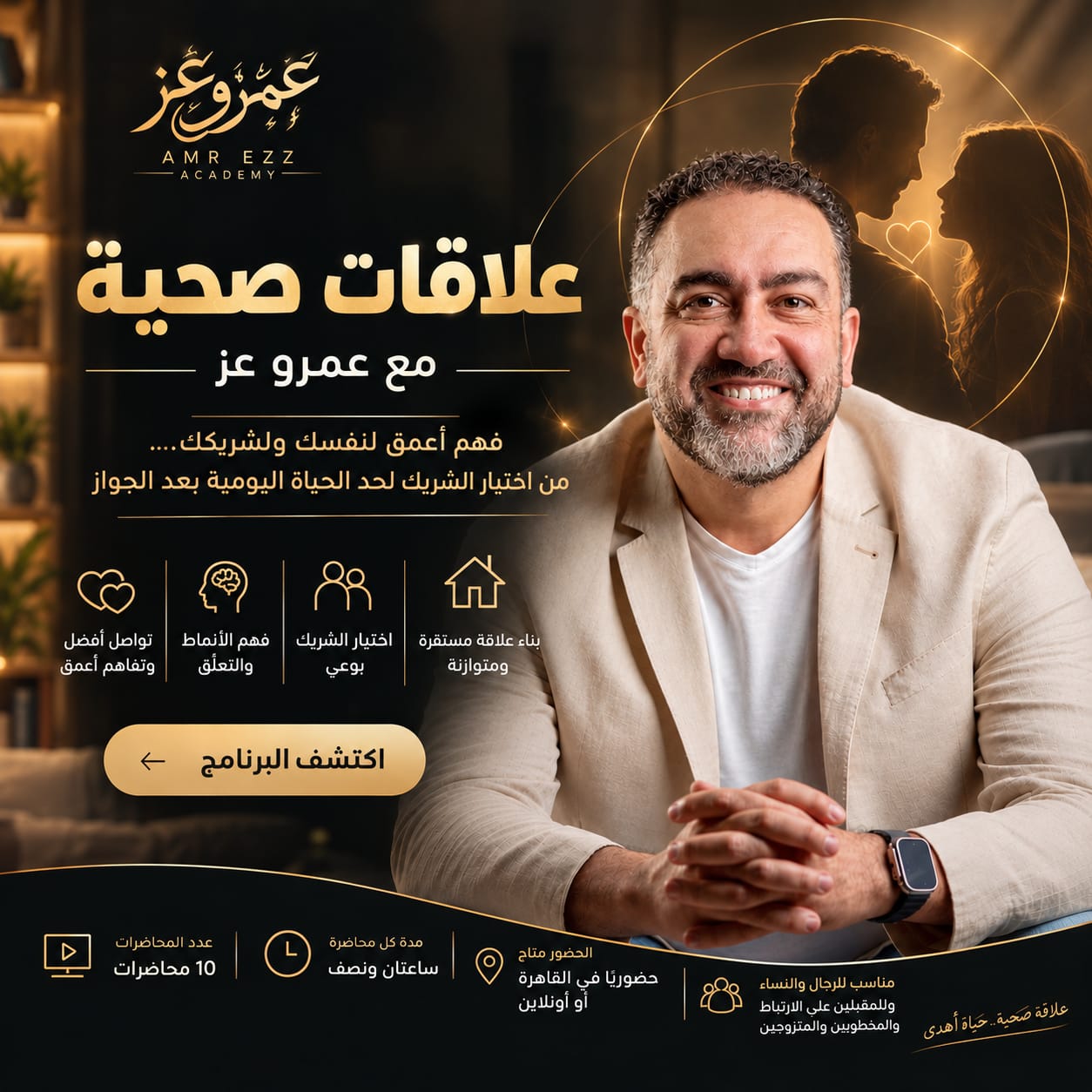
How does this differ from the Healthy Relationships course?
This course focuses on emotional intelligence skills over two sessions totalling 5 hours. Healthy Relationships is a broader, longer programme.
Is the course a substitute for a consultation?
No. The course teaches general skills. If you need to discuss your circumstances personally, you can book an individual consultation.
Who presents the course?
Amr Ezz, relationships, parenting and psychological support consultant, certified trainer, author of 3 books, with more than 160 media appearances and long practical experience working with relationship and marriage issues.
Attendance and booking
Individual booking is available whether you are single, engaged, or married and attending alone. The individual price covers one person; the two-person booking covers a married or engaged couple. Review your booking details and final total before paying.
Need a path tailored to your situation?
If you would like to talk about your situation personally, you can book an individual consultation.
Book your consultationStart by reflecting on how you handle emotions
The Emotional Intelligence in Relationships test helps you reflect on your behaviour through the track that fits your current situation: single, engaged, or married. The result describes your responses; it is not a diagnosis or a judgement of compatibility. Taking the test is optional and is not required to book the course. The test is currently available in Arabic.
Payment Methods
🏦 Bank transfer: Banque Misr – BANQUE MISR
Account name: ConComp for Consulting – Concomp
Account number: 4760001000029711
IBAN: EG060002047604760001000029711
SWIFT code: BMISEGCXXXX
📌 After transferring, please send a screenshot of the transfer to confirm your booking